Secondary Sceats
710–760 AD
The Secondary Sceat series marks the development and diversification of early Anglo‑Saxon silver coinage following the Primary phase. Struck between the early and mid‑8th century, these issues display a remarkable variety of regional styles, imitative types, and evolving iconography. Series G, J, and O in particular show both continental influence and distinct local innovation, with designs ranging from refined busts to highly abstract or symbolic motifs. Their wide circulation and stylistic diversity make Secondary Sceats an essential component in understanding the monetary and cultural landscape of pre‑Viking England.
CLICK ON THUMBNAILS TO ENLARGE
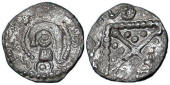
WS 8577 — Base Silver Sceat
Base Silver Sceat. Series G, Type 3a (imitative). Large, crude, diademed bust right, braided hair, chevron ear, crescent drapery with cross in front. ® Beaded standard, central pellet in annulet, saltire crosses in corners, pellets between. 0.9 g. Spink # 800 var. Abramson Sceatta List 21/70. Rare.
£165.00
WS 9952 — Ae/Ar Plated Sceat
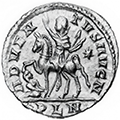
Ae/Ar Plated Sceat. Series J ('York'), type 85. Large diadem head right. ® Bird on a cross with large annulet at the end of each arm, pellets in field. 1.1 g. Spink # 802. Met 293–5. Abramson Sceatta List 18/20. Good weight and a good example of a plated type 85 with most of the silver surface intact.
£145.00
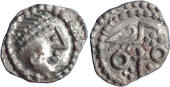
WS 7750 — Ar Sceat
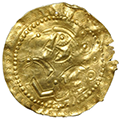
Ar Sceat. Series J type 36. Diadem bust right, cross before. ® Two birds left, cross before. 0.9 g. Spink # 802D (791A). Met 361–4. Abramson Sceatta List 20/20.
£375.00
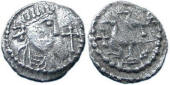
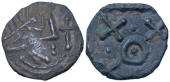
WS 8809 — Ar Sceat
Ar Sceat. Series O/Saltire. Crude head left with large annulet eye, long swept‑back hair, inside double border of pellets. ® Saltire cross in beaded standard, trefoils in angles, symbols in margin. 0.9 g. Abramson Sceatta List 59/20. Extremely rare.
£1250.00